Max van Manen
Professor Emeritus - University of Alberta
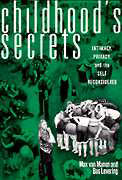
Max van Manen and Bas Levering
This exploration of secrecy aims to overturn prevailing views of secrets as undesirable or unhealthy social and psychological phenomena. It looks at the positive aspects of secrecy and identifies it as a crucial part of human development.
Also available in: Dutch, Brazil, Portuguese, Spanish, German, Chinese.
Contents
Chapter One
- Introduction
- Stories of Secrecy
- Peek-a-boo and Hide’n Seek
- Can You Keep a Secret?
Chapter Two
- Modes of Secrecy
- Existential Secrecy
- Communicative Secrecy
- Personal Secrecy
- Language and Secrecy Experience
Chapter Three
- How Do We Experience Secrecy?
- Hideouts and Passage Ways
- The Secret Place to Withdraw
- Secret Compartments, Drawers and Boxes
- Wardrobes and Closet Spaces
- Secret Manifestations and Imaginations
- The Adventure of Secret Play Space
Chapter Four
- Secrecy in Fiction
- The Second Self
- The Intimate Self
- The Haunted Self
- The Illicit Self
- The Dark Self
- The Orphaned Self
Chapter Five
- Where do Secrecy and Privacy Come From?
- Must One Always Be Open and Truthful?
- What Does it Mean to Be Reserved?
- What Calls for Privacy?
- What Calls for Secrecy?
Chapter Six
- Differences between Secrecy and Privacy
- The Intimacy Factor
- The Content Factor
- The Language Factor
- The Moral Factor
- Conclusion
- Why Do We Value Secrecy and Privacy?
Chapter Seven
- The Physiognomy of Secrecy
- The Transparent Body
- Feeling Excluded
- Snubbing and Difference
- Cultural Codes
- The Glance
- The Wink
- The Secret Smile
- The Smirk
- The Enigmatic Image
- The Mask
- The Sudden Silence
- Learning Psysiognomy
Chapter Eight
- Secrecy and the Origin of Identity
- Self and Other
- Body and Self
- Pre-identity and Self-differentiation
- Identity and Inner Self
- Is Secrecy Possible? The Psychological Question
- Is Secrecy Possible? The Philosophical Question
Chapter Nine
- The Development of Inwardness
- Cognitive Development of Secrecy
- Secrecy as Inner-Space
- Cultural Development of Inwardness
- Inwardness and the Path of Confession
Chapter Ten
- Secrecy and Postmodern Culture
- The Postmodern Self
- The Plural Self
- Lost Inwardness?
Chapter Eleven
- Lying and Secrecy
- Learning to Hide
- Lying Language
- The Morality of the Child’s Secret as Lie
- The Skill of Lying
- Gossip
Chapter Twelve
- The Childhood of Secrecy
- The Secrecy of Childhood
- Childhood Secrecy as a Function of Adult Culture
Chapter Thirteen
- Guilt, Shame and Embarrassment
- Exposing Secrets in front of Others
- Exposure of Debt: Guilt
- Exposure of Fault: Shame
- Exposure of Innocence: Embarrassment
Chapter Fourteen
- The Pedagogy of Secrecy
- The Need for Supervision and Privacy
- Institutional Relations and Pedagogical Attentiveness
- Supervision and Lack of Privacy
- Supervision in the Classroom
- Supervision as Genuine Interest in the other Person
- Life’s Secrets
- Who Am I?
Chapter Fifteen
- Conclusion
- Bibliography
Translations
Utrecht, The Netherlands: De Tijdstroom
Postpus 19135
3501 DC Utrecht
The Netherlands
Jonge kinderen denken dat hun ouders dwars door hen heen kunnen kijken. Pas als ze zo’n jaar of vijf zijn, ontdekken ze dat het mogelijk is om gedachten voor anderen verborgen te houden. Die geboorte van het innerlijke is een aangename én een schokkende ervaring. Het bewaren van geheimen leer je niet van de ene dag op de andere. Klein geheim gaat over de positieve betekenis van het geheim. Geheimhouding tekent de relatie tussen mensen, die van opvoeders en kinderen incluis. Geheimen zijn onontbeerlijk voor het ontstaan van individualiteit. In Klein Geheim wordt de betekenis van geheim in het leven van het kind en in onze cultuur van alle mogelijke kanten bekeken. Zo bezien is het geheim werkelijk overal.
Porto Alegre: Artes Médicas. (1997)
“Alguns segredos sao tesouros que as criancas cobicam; como flores numa floresta, esses segredos acompanharn 0 territbrio da infancia. Outros segredos sao impostos as crian~as; as vezes, esses segredos se transformarn em coisas malignas e monstros, deixando cicatrizes complexas nas membranas da identidade pessoal.”
Esta maravuhosa exploracao do significado e da importancia do segredo derruba as visoes prevalentes dos segredos como indesejaveis ou doentios. Segredos da infancia: intimidade, privacidade e novos estudos sobre 0 self identifica o seg redo como uma dirnensao crucial do desenvolvimento humano-mostrando como Os segredos comuns, do cotidiano, fazem a cnan~a tomar consciencia do espaco interno e dos mundos externos, o que as ajuda a desenvolver urn senso de self responsabilidade pessoal, autonomia e intimidade nas relacaes humanas- e revela a fascinante relacao entre Os segredos da infancia e as vidas adultas. Uma leitura extremamente interessante, o livro oferece inumeros exemplos de experiencias de segredos, conlorme Os encontramos na vida cotidiana, e desafia as nossas suposic6es sobre a etica do silenclo, privacidade, reserva, mentira e, fundamentalmente, a moral idade da vida.
Este ljvro e’ um recurso importante para Os cursos de fundamentos da educacao, desenvolvimento da crianca e teoria do curriculo, assim como para professores, pesquisadores e estudiosos da educacao da infancia inicial, filosofia da educacao, psicologia, aconseihamento, pedagogia e hjst6ria da infancia. Para Os pals e leitores em geral, este tambem e’ um Iivro fascinante.
Lisboa: Instituto Piaget. (1998)
To order:
Insituto Piaget
Largo da Madre de Deus, 9
1900 Lisboa
Portugal
Ediciones Padidos Iberica, S.A.
Mariano Cubi,
92 - 08021 Barcelona,
Spain (1999)
Esta maravillosa exploracion del sentido y de la importancia de los secretos pone en tela dejuicio las ideas predomnantes que suelen emitirse acerca de ellos, casi siempre considerados como algo indeseable o insano. Se trata de un libro que identifica el secreto como una dimension crucial del desarrollo humano e ilustra como los secretos normales y cotidianos logran que los ninos sean conscientes tanto del espacio interno como de los mundos externos, algo que, a su vez, les ayuda a desarrollar el sentimiento de si mismos, la responsabilidad personal, la autonomia y el sentido de la in tim idad en las relaciones humanas, revelando asi las fascinantes conexiones existentes entre los secretos de la ninez y los de la vida adulta. De una gran amenidad, la obra proporciona ademas decenas de ejemplos de vivencias centradas en el secreto, tal como podemos encontrarlas en nuestra vida diaria, y plantea un reto a nuestras suposiciones sobre la etica del silencic, lo privado, la reserva, la mentira y, en ultimo extremo, la moralidad de la vida. Por todo ello, este volumen resultara de gran ayuda para todos aquellos que esten implicados en cursos sobre los fundamentos de la educacion, el desarrollo infantily la teoria de losprogramas educativos; asz como para profesores; investigadores y estudiantes de educacion de la primera infancia, la filosofta de la educacion, Ia psicologia, el asesoramiento, la pedagogia y la historia de la infancia. Del mismo modo, sera una lecturafascinante para los padres y los lectores en general.
Max van Manen es catedratico de la Facultad de Pedagogia de la Universidad de Alberta (Canada) y tambien autor de El tacto en la ensenanza, igualmente publicado por Paidos. Bas Levering es proftsor del Departamento de Estudios sobre la Jnfancia en la Universidad de Utrecht. IS BN 84-493-0744-9
Julius Klinkhardt Verlagsbuchhandlung.
Ramsauer Weg 5. 83670 Bad Heilbrunn.
Tel. 08046 / 9304. Fax. 08046 / 9306.
E - Mail: [email protected]
Geheimnisse und Geheimhaltung bilden entscheidende Faktoren für die Entwicklung der menschlichen Identität. Auf den ersten Blick scheint es sich um ungewöhnliche Phänomene zu handeln. Die vorliegende Untersuchung macht juedoch an vielen Beispeieln aus der Literatur und aus biographischen Erzählungen deutlich, daß man es heir miht Alltagsphänomenon zu tun hat. Diese tragen dazu bei, daß die Kinder zunehmend zwischen ihrer inneren und der äußeren Welt zu unterscheiden in der Lage sind — die Voraussetzung dafür, daß sie ein eigenes Selbstbild entwickeln, sich ihrer persönlichen Verantwortung bewußter werden und Autonomie und Intimität im Rahmen zwischenmenschlicher Beziehungen gewinnin und gestalten können.
Aus pädagogischer Perspektive gelingt es den Autoren, die ethischen und moralishen Implikationen von Geheimnissen und Praktiken der Geheimhaltung aufzudecken.
Herangezogen werden zum einen historische Quellen und Beispiele, an denen die konstitutive Bedeutung der Geheimnisse für die Trennung zwischen Privatsphäre und der Öffentlichkeit in der Entwicklung moderner Gesellschaften offenbar wird, zum anderen werden entwicklungspsychologische, soziologische und philosophische Theorieangebote kritisch daraufhin überprüft, wie weit sie die wichtige Bedeutung von Geheimnissen für die Identitätsbildung des modernen Menschen angemessen zu berücksichtigen vermögen.
Das vorgelegte Buch eröffnet einen neuen Blick auf die kindliche Entwicklung und die Genese moderner Gesellschaften.
Max van Manen ist Professor in der Fakultät fur Erziehung an der Universität von Alberta, Edmonton, Kanada.
Bas Levering ist Associate Professor an der Abteilung fur Kindheitsstudien der Universität Utrecht, Niederlande.
Der Übersetzer Wilfried Lippitz ist Professor fur Systematische/Vergleichende Erziehungswissenschaft an der Justus-Liebig-Universität Geißen.